
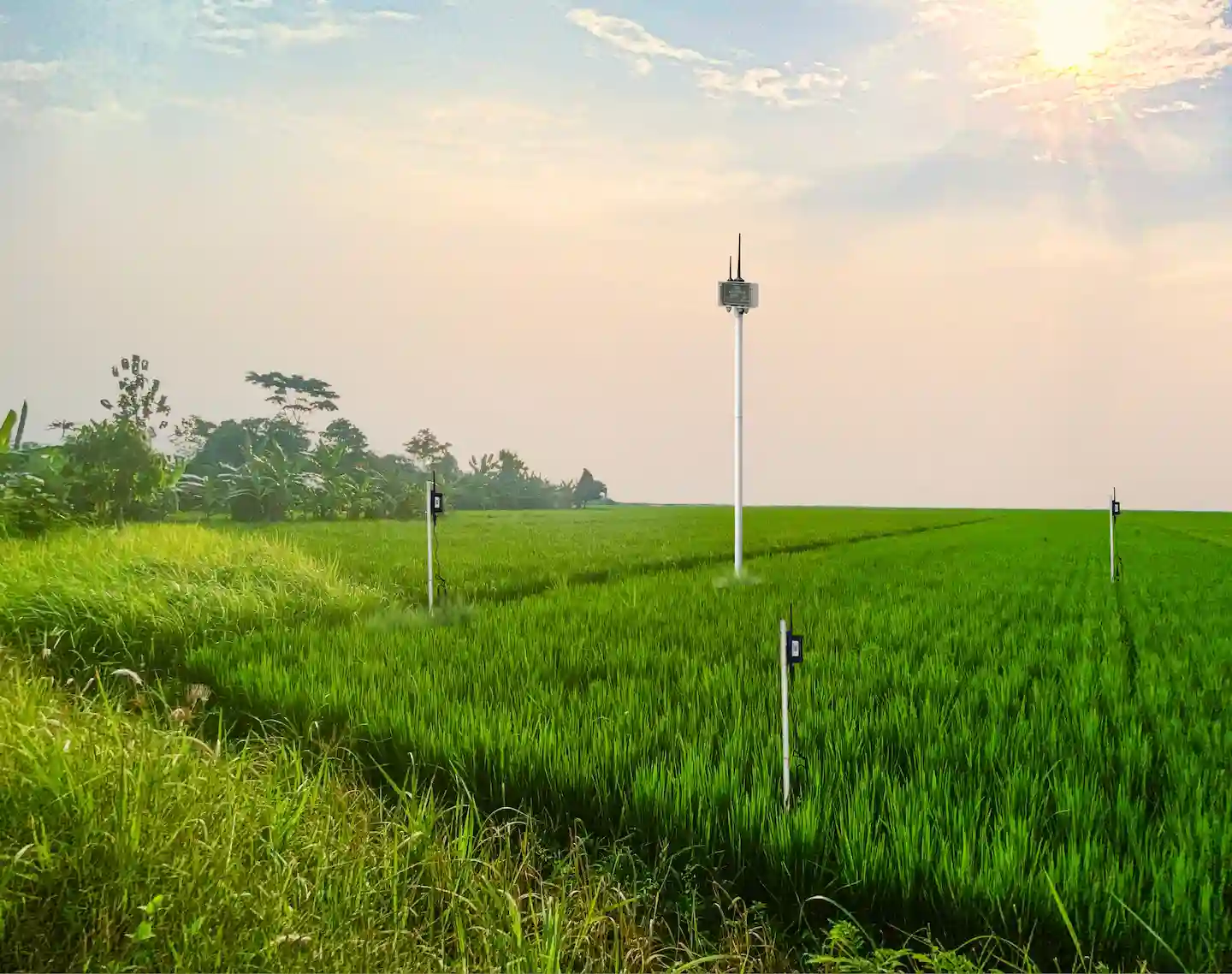

cultYvate’s IoT-backed AWD programme verified ~10,574 tCO₂e in potential carbon credits across 1,975 Punjab paddy farmers, creating a new income stream for smallholders while cutting methane emissions at scale
Problem
Paddy cultivation emits ~3 tCO₂ per hectare per season, making it one of agriculture’s biggest methane sources. Punjab alone produces 11% of India’s rice, almost entirely under continuous flood irrigation that keeps fields permanently waterlogged. Anaerobic decomposition of organic matter in standing water triggers methanogenesis, releasing large volumes of methane. Farmers had no visibility into actual crop water needs, no incentive to reduce irrigation, and no way to monetise climate-positive behaviour. Existing AWD approaches had failed to scale because manual water-level measurement was unreliable and there was no MRV system that could make farmer actions auditable for carbon markets.
Solution
END-TO-END CARBON PROGRAMME
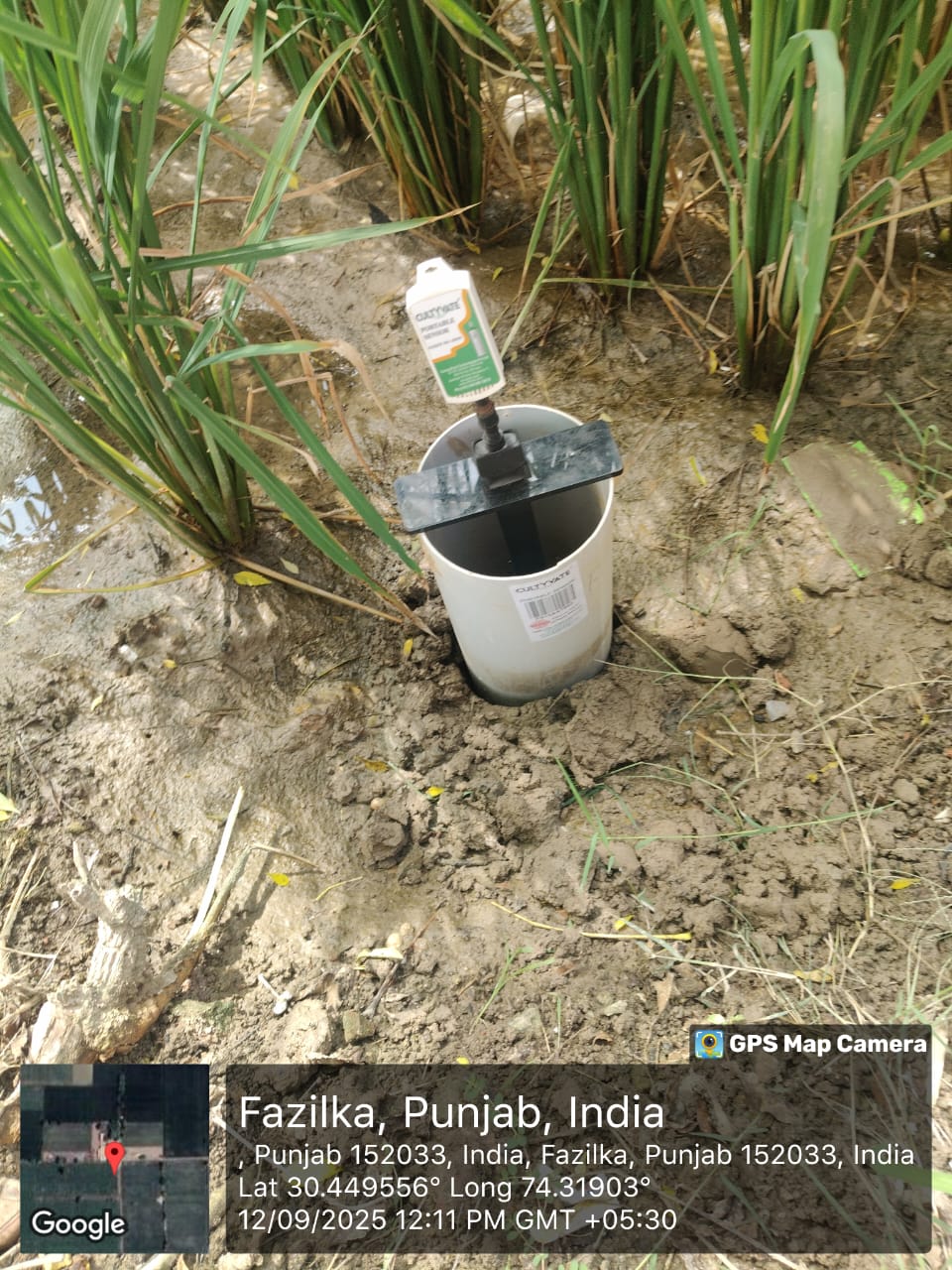
cultYvate built the full-stack platform, including hardware, software, and field operations, to make AWD carbon credits work at the farmer level. The patented portable IoT AWD sensor replaced unreliable manual measurement. The digital MRV platform eliminated paper records. And a 5-step automated advisory loop ensured every farmer received timely, accurate irrigation guidance, on a basic feature phone, in the local Punjabi language, without needing to understand the science.
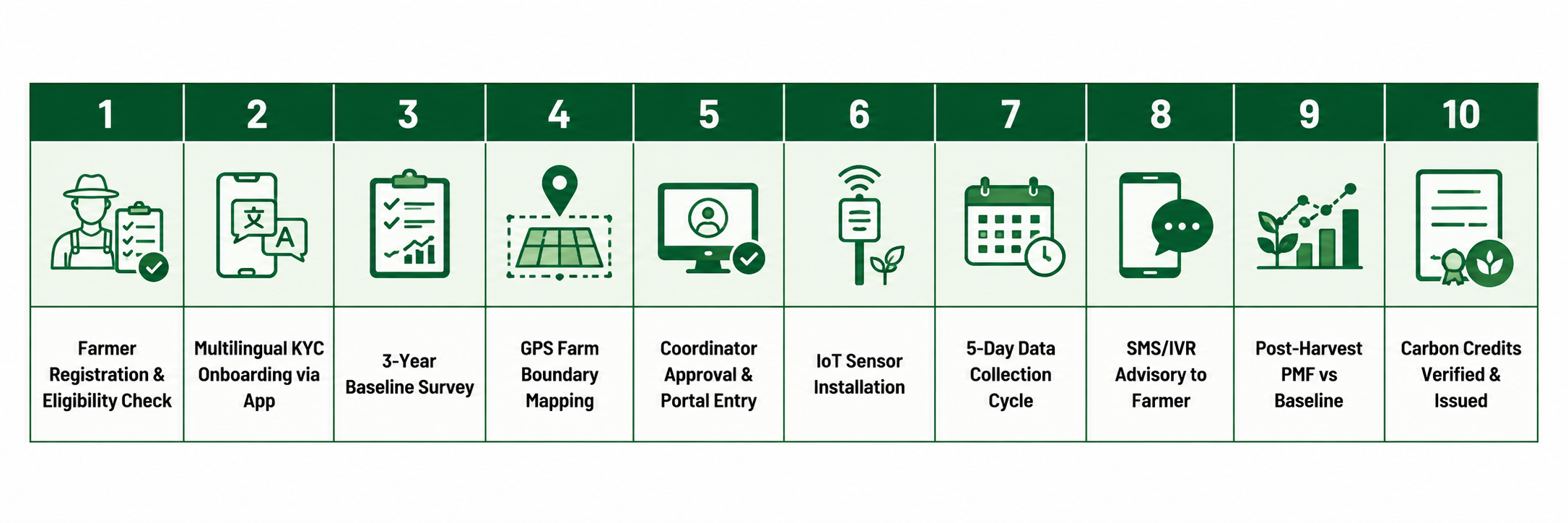
| cultYvate’s patented portable AWD sensor uses computer vision to read water levels in the field. Data is uploaded to the cloud, processed by a proprietary crop-demand algorithm, and an irrigation advisory is dispatched to the farmer’s basic phone via SMS — in Punjabi. If data is not submitted within 3 days, the Field Officer is escalated; at 5 days, the Field Manager is alerted. The complete MRV record — from baseline to post-harvest — is maintained on the cultYvate portal in real time, aligned with Gold Standard reporting requirements. |